
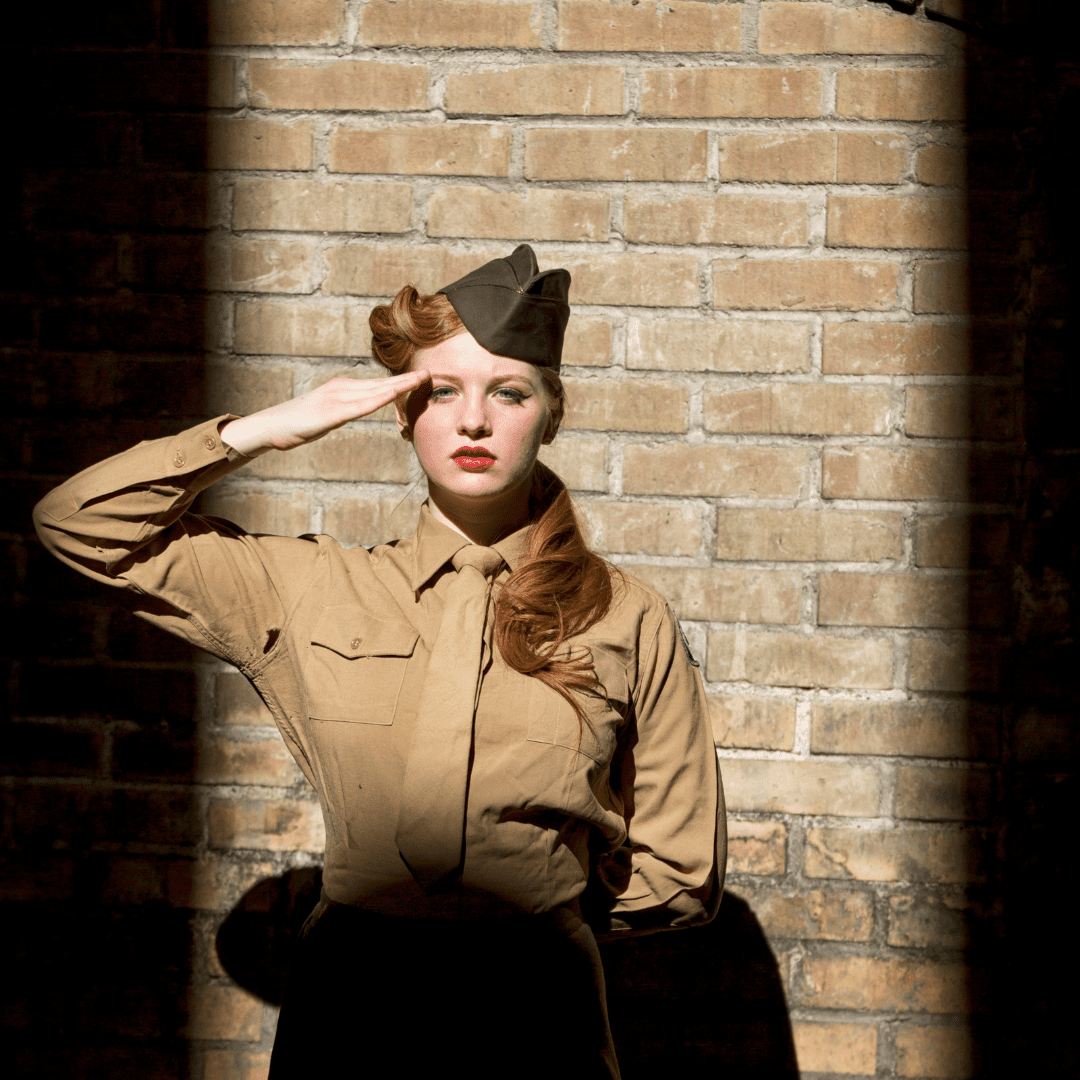
80 Years – 8 decades of change
This month we celebrated the 80th anniversary of VE Day, marking the end of World War II. A devastating war which lasted almost 6 years and took millions of lives. In the 8 decades since, society has changed immeasurably. Women born since 1945 have greater opportunities and more personal freedom than ever before – socially, economically, politically and legislatively. This 80th anniversary is a time to reflect on important changes to women’s rights and the challenges that remain.
Women’s equality – the fight for women’s rights
It would not be fair to talk about women’s equality without remembering the brave women who fought to progress women’s rights by securing the vote. This laid the foundation for seismic change and was defined by a campaign as impressive as it was fearless.
On 13th October 1905, Christabel Pankhurst and Annie Kenney were arrested in Manchester. The charge – they interrupted a political meeting with a banner that read, ‘Votes for Women.’ One of the speakers was a young Winston Churchill, and this moment marked the start of the suffragette campaign.
Emmeline Pankhurst, Christabel’s mother and probably one of the best-known suffragettes, led the Women’s Social and Political Union (WSPU) in almost military fashion, recruiting huge numbers of members, organising marches, raising funds and publishing a newspaper.
Over many years, the suffragettes applied increasing pressure on the government, even though at the time, not all men had the vote either. One day, reluctantly, the prime minister Herbert Asquith suggested that he would take more notice if it could be proved that enough women wanted the vote.
So, in June 1908, the WSPU held a record-breaking rally in Hyde Park. It was deliberately held on a Sunday so that working women could attend, and over half a million women took part. Special trains were chartered, 30 bands played, and 3000 standard bearers led the way, waving flags displaying suffragette colours – purple for loyalty, white for purity and green for hope.
Women’s rights – suffrage was finally won
It would still take another 10 years before women over 30 with a property qualification were allowed to vote, and it was not until 1928 that all women over 21 finally secured the same voting rights as men.
In the face of much dismissiveness by the political elite, the suffragette movement did resort to increasingly extreme measures, including hunger strikes, smashing windows, and even bombings. It was a final push of civil disobedience embodied by their slogan, ‘Deeds not words.’
Their campaign, however, was at its heart a supreme achievement in strategy, tactics, branding, and PR. The women carefully considered every aspect, including how they dressed and their decision to wear red lipstick as a sign of strength, rebellion, and feminine power.
Thousands of banners and signs were printed and sewn as advertising and propaganda. The women used themselves as advertising, wearing aprons emblazoned with ‘Votes for Women’ and which displayed details of protest marches. As Christabel Pankhurst commented in August 1906,
‘Women, once they have got hold of anything, will not let it go.’
Women in society – private to public roles
When war broke out in 1914, the suffragettes’ disruptive efforts were halted to contribute to the war effort. From this point onwards, women took on a more public role in society, and this shift eventually helped secure suffrage.
It has been almost 100 years since that historic vote, and society for women has transformed. Courageous women fought for equality, and today equally tenacious women and organisations continue to promote women’s rights, challenge stereotypes and push for progress on the equality agenda.
Women’s rights – political and legal
The vote in 1928 established women’s political rights, and this was further cemented in the post-war years, when women continued to work more and saw their roles expand into a greater number of professions.
In 1970, the Equal Pay Act was passed, followed by the Sex Discrimination Act in 1975, outlawing discrimination based on sex or marital status in employment or education.
In 1979, Britain had its first female Prime Minister when Margaret Thatcher was elected. In 1986, statutory maternity pay was introduced, and maternity rights for women continued to improve through the late 80s and 90s.
‘The 2024 general election returned the highest number and proportion of female MPs ever recorded: 263 (40%) of 650 MPs are women, up from 220 in 2019.’
Women’s rights – social and domestic
1967 saw further dramatic social change for women in Britain with the passing of The Family Planning Act and The Abortion Act. The former enabled local authorities to give contraceptive advice to unmarried women, whilst the Abortion Act made terminations legal under certain circumstances, but excluded Northern Ireland, where only a limited number of abortions were permitted if the mother’s life was seriously in danger. It was not until 2019 that abortion in Northern Ireland was decriminalised.
These policies, together with the introduction of the contraceptive pill in the early 1960s and especially when it was made available and free to all on the NHS from 1974, finally gave women choice and control over reproduction and their bodies.
The establishment of Women’s Aid in 1974 was another hugely significant moment that benefited women’s lives. This organisation set up a national network of independent refuges and support for women and children suffering domestic abuse. Such organisations still campaign tirelessly to raise awareness of domestic abuse and promote legal support for those facing violence and fear.
The latest ONS bulletin on domestic homicides, clearly show the gendered nature of domestic abuse and that 67.3% of domestic homicide victims were female. Of the 249 female victims, the suspect was male in a staggering 241 cases. In the majority, the suspect was a male partner or ex-partner (74.7%).’
In researching this piece, it is hard to believe that marital rape was only criminalised in 1991. There is a tremendous amount still to do to protect and support women.
Legal equality for all
In 2010, the Equality Act was passed, consolidating anti-discrimination and equal representation based on 9 protected characteristics: age, disability, gender reassignment, marriage and civil partnership, pregnancy and maternity, race, religion or belief, sex and sexual orientation.
Women’s rights – economic
As a result of significant legislative changes lobbied for by women and supportive male peers, much has changed in the workplace. In 1973, women joined the stock exchange for the first time, and by 2024, 44.7% FTSE 100 board members were women.
‘Since 2011, there has been a seismic shift in the gender balance of British boards from 9.5% FTSE 350 women board members in 2011, to 43% today.’
There are, however, only 19 female CEOs across the UK’s FTSE 100 and FTSE 250 companies.
More work is also needed to close the gender pay gap. For full-time work, the figure stands at 7.0%, a quarter-point decline over the last decade. That said, it is larger among high earners and those over 40. Consulting firm PwC estimates it will still take 45 years to close the gender pay gap.
There is also the pension gap to consider,
‘Women’s pension wealth reaches 62% of men’s pension wealth by their late 50s.’
Equally, more still needs to be done to tackle occupational segregation in the labour market. Current statistics highlight positive change; however, there is further to go:
· 80% Secretaries and administrators are women
· 50% Doctors are women
· 32% Police commissioners are women
· 24% Vice Chancellors in universities are women
· 21% KCs are women
· 18% Officers in the armed forces are women
Evaluating the changes in women’s increased representation
This summary of the last 80 years, or indeed the near-century since women won the right to vote, is far from exhaustive.
In education, recent efforts in STEM have encouraged more girls to pursue Science, Technology, Engineering, and Mathematics, and in higher education, 57% are now women.
For families, flexible working, shared parental leave and improving childcare access are ongoing areas for development. Attitudes continue to shift, even as evidence shows that women still carry the bulk of caring responsibilities.
Concluding words
In a closing nod to popular culture, some words rang in my mind whilst writing this piece:
‘We’ve come a long, long way together. Through the hard times and the good. I have to celebrate you, baby. I have to praise you like I should.”
These lyrics are most likely recognised from the 1998 Fat Boy Slim hit ‘Praise You’, however, they are in fact vocals sampled from a song by Camille Yarbrough and were recorded 25 years earlier. Yarbrough, a singer and children’s author, wrote them to reflect the struggles of female pioneers who worked together to change society. In an interview for The Herald in 1999, she said,
‘Take Yo’ Praise’ was written for all the people who had come through the black civil rights movement, who had stood up for truth and righteousness and justice, because human beings need to praise and respect one another more than they do.’
Finally, the last word goes to Bonnie Garmus, author of the wonderful Lessons in Chemistry, creator of the formidable and irrepressible character, Elizabeth Zott.
‘And no more allowing anyone to pigeonhole you into useless categories of sex, race, economic status, and religion. Do not allow your talents to lie dormant, ladies. Design your own future. When you go home today, ask yourself what YOU will change. And then get started.”
Sources:
The suffragettes in Hyde Park | The Royal Parks
2024 general election: How many women were elected?
Gender pay gap in the UK – Office for National Statistics
20240207-underpensioned-defining-the-gender-pension-gap-final.pdf
Praise you, Camille | The Herald
The History Of The Red Lip And The Women’s Movement | British Vogue
Lessons in Chemistry, Bonnie Garmus – Published by Penguin
Podcast: Origin Story – The Suffragettes – Part one – Deeds not words