

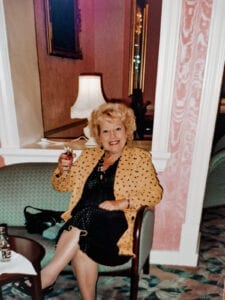
I thought it would be interesting to chat with my Nanny this week. I wanted to discover what it meant to be a woman in the middle of the 20th century. My Nanny is one of the strongest women I have ever met. My Grandad was a serial cheat. She had three children with him, but after one extra-marital affair, too many, she chucked him out. She would have done it sooner but, like most women (probably even now), stayed with him for the kid’s sake. She finally left him in about 1970. This was a courageous decision, as divorce was nowhere near as common as it is now. Women still faced much discrimination during this period (they couldn’t apply for a mortgage without a male signature, for example). Due to the War, my Nanny missed out on a lot of education. But she became a successful businesswoman in later life, proving that anything is possible.
So tell me about your schooling.
I attended school on a very sporadic basis. I was an only child. Although I was eligible to be evacuated (Nanny grew up in Tooting in South London), I didn’t want to leave my mum. Most of my peers were evacuated. The male teachers we had were away fighting in the War, so the school sort of gave up. It wasn’t always open. When we did attend, we were often taught by non-qualified stand-in teachers. I feel the only thing I learned from my early school years was how to build doll’s furniture out of matchsticks! My mum taught me how to read in the evenings.
I also had a creepy male stand-in teacher who caressed my hands when talking to me.
Once the War finished, my school friends returned to London. They had attended school full-time in the areas they had been evacuated to. They were, therefore, way ahead of me in terms of reading, writing and maths. I felt incredibly left behind and stupid.
I learned more at secondary school. With my aunt’s encouragement, I attended secretarial college, where I learned shorthand and typing.
Tell me about your first job.
The same Aunt who encouraged me to attend secretarial college found me a job at her workplace. This was a Wine and Spirit Merchant based in the City of London. It was a small office – just five people, including my Aunt and me. We were the only women. The manager often spoke to me in a very patronising manner because I was a young woman. My other colleagues were friendly.
How did things change after you got married?
I was allowed to continue working after marrying, so the Marriage Bar in effect in some workplaces didn’t affect me. I gave up my job when I got pregnant, but I wasn’t too sad to leave—all I wanted was to be married with a child.
Once I had the children, I continued to work odd jobs. I would have tea ready for your grandad when he got home from work, put the kids to bed and then head out to work myself. I worked in the evenings as a barmaid and a cinema usherette.
When did you decide to dream a ‘little bigger’?
After attending the Ideal Homes Show exhibition and seeing a model of my dream home, I got bigger aspirations. This home was on a new estate in Epsom, Surrey. I thought it would be nice to bring up the children away from London in the ‘country’. We couldn’t really afford the mortgage payments, but I persuaded your grandad that I would take on better-paid work so we could pay the bills. It was his idea to go back to my secretarial roots. I set myself up as a Secretary working from home.
How did you grow your own business?
I advertised myself as a Secretary in the local paper. I would work from home around the children, typing for local business people. I enjoyed it, but felt that working from home put me in a vulnerable position. Men thought they could take advantage of me. They would come to collect their typing and then suggest going upstairs.
I thought these unwanted sexual advances would stop if I started to work from commercial premises. My marriage was also breaking down then, so I looked for a shop with a flat above it.
When I went to the bank to apply for the mortgage, the male Bank Manager said they couldn’t process my application without a male signature. (At this point, I wasn’t speaking to your grandad). The Bank Manager told me he could sort it out if I went into his office and gave him some ‘extras’. I didn’t do that, but I was so angry that women could be taken advantage of like that. My friend’s husband was also a Bank Manager. He did me a favour by sorting my mortgage application without needing your grandad’s signature (or any sexual favours). Shortly after that, I moved into my new premises. I expanded my business to cover printing and traditional secretarial services.
Did you experience any sexism when running your business?
I still experienced some unwanted sexual behaviour from my male clients, but it was more subtle than when I had worked from home. They would be a bit ‘touchy-feely’. You just had to make it clear that you weren’t interested. They soon got the message.
I also remember attending a networking business dinner for those in the printing industry. When I arrived, I realised I was the only female business owner in attendance. The organiser had put me on the table with all the ‘wives’. Well, I soon sorted that one out and got moved tables. That way, I could network with all the other business owners like the other attendees.
Did you give back to your community as a business owner?
I gave back to the community by regularly employing ex-offenders on their release from jail. I never had any trouble with any of them. They were all brilliant employees.
Are you pleased with women’s progress over the past 90 years?
Yes – I am pleased that women can be a lot more independent. They have more aspirations than we did. It felt like the only career options open to women when I was at school were teaching, nursing or secretarial work.
She also asked me if women experienced the same unwanted sexual advances in the workplace that she had regularly experienced. I assured her I had not witnessed anything like that (I recognise I might be lucky in that regard).
So there it is – a brief history of my Nanny’s career. She is still a lively feminist who, despite the constraints placed on women at the time, managed to navigate her way through what was, without a doubt, a man’s world. By the time she sold her shop on her retirement, she was managing a team of 6, had paid off the mortgage, and, in her spare time, was treading the boards in her local amateur dramatics society. She has never been afraid to fight for what she believes is right. She is a real inspiration to me.
Are you pleased with how women’s rights have progressed over the past 90 years? What progress do we still need to make? Let me know by messaging me here. I can’t wait to hear from you!