

In the ever-changing world of business strategy, the SWOT analysis stands out as a solid tool for analysing opportunities and threats, shedding light on what’s happening inside and outside a company.
Whether you’re figuring out where your startup is headed, navigating a tricky marketing campaign, or teaching strategic planning, knowing what a SWOT analysis is and why it matters is key.
This guide will dig into the ins and outs of SWOT analysis, showing how vital it is for planning, the benefits it offers, and how to use it effectively. But first, what’s a SWOT analysis, and why is it so important?
Understanding SWOT Analysis
Let’s dive into what SWOT Analysis really means and why it’s so important for making smart decisions, like accepting a counter offer…
Defining SWOT Analysis
SWOT analysis, which represents Strengths, Weaknesses, Opportunities, and Threats, is a strategic planning tool used to help individuals or organisations identify internal and external factors that may impact long-term goals and strategies.
SWOT Analysis Meaning
SWOT functions as a roadmap on a chart, featuring four quadrants categorising different data types. Internal factors within your control, such as Strengths and Weaknesses, are juxtaposed with external elements, such as Opportunities and Threats, which require awareness but may not be alterable.
By organising information in this manner, SWOT offers a comprehensive framework for assessing your business, elucidating its meanings and utility in analysis.
The Benefits of SWOT Analysis
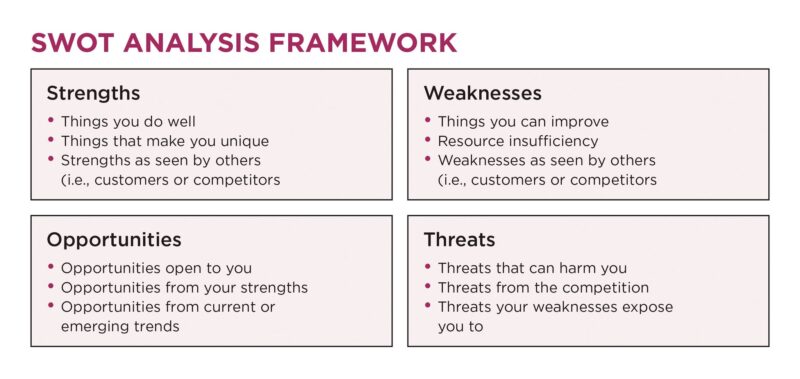
You can take a look at the top 3 benefits of SWOT analysis to understand its significance.
Advantages of SWOT Analysis:
- Strategic Insights: SWOT provides more than a simple breakdown of key factors. Engaging with SWOT offers strategic insights into your current position and the path to success in your target market, highlighting the benefits of SWOT analysis.
- Competitive Advantage: SWOT aids in identifying your competitive strengths and helps in devising optimal strategies to leverage them effectively, showcasing the role of SWOT analysis in business.
- Proactive Planning: By assessing various scenarios and comparisons, SWOT facilitates proactive planning, demonstrating how to conduct a SWOT analysis and the format involved.
Understanding the importance of a SWOT Analysis is crucial; it’s also important to acknowledge its limitations. If you own a business and are keen to establish a safe work environment, please explore the most effective methods to do so before proceeding.
The Limitations of SWOT Analysis
Although SWOT Analysis is valuable for strategic planning, it has limitations. These include subjective assessments of factors, an excessive focus on internal aspects, a lack of prioritisation, and a lack of direct strategy development. This necessitates a deeper dive into the meaning of SWOT analysis and how to craft one effectively.
How to do a SWOT Analysis?
Here are 10 steps to help you create your SWOT Analysis :
- Clearly define your objective.
- Gather information from various sources, such as market research and customer feedback.
- Identify company strengths that set you apart.
- Examine weaknesses for areas of improvement.
- Explore growth opportunities and market trends.
- Consider threats like competitors and economic factors.
- Prioritise categories based on impact and likelihood.
- Develop strategies that leverage strengths and address weaknesses.
- Implement strategies by allocating resources and setting goals.
- Regularly update your SWOT analysis to adapt to market changes.
Please note that you can also find free SWOT Analysis Templates online, tailored to your specific requirements, to enhance your audit’s structure.
SWOT Analysis Examples

Understanding the significance of SWOT requires practical application across diverse areas such as business strategy, career growth, and education. Case studies such as SWOT analyses of nursing, McDonald’s, and Netflix offer valuable insights.
Netflix SWOT analysis
Strengths:
|
Weaknesses:
|
Opportunities:
|
Threats:
|
Netflix SWOT analysis
McDonald’s SWOT analysis
Strengths:
|
Weaknesses:
|
Opportunities:
|
Threats:
|
McDonald’s SWOT analysis
SWOT analysis nursing
Strengths:
|
Weaknesses:
|
Opportunities:
|
Threats:
|
SWOT analysis nursing
Conclusion
In conclusion, conducting a SWOT analysis is a concrete step toward better understanding your business environment. It aids in identifying key issues, allows for well-informed strategic planning, and provides a clear path to leverage advantages while mitigating potential risks.
Whether spearheading a startup, managing a mature business, or seeking personal career growth, embracing the SWOT methodology can illuminate the road ahead and enable decisive action.
Regular engagement with this process ensures your strategies stay aligned with evolving market dynamics, securing the resilience and agility of your endeavours.
For digital business leaders looking to build trust with their remote teams, adopting the best practices is crucial and can be explored in depth at Investing in Women.
FAQ
- What is a SWOT Analysis?
A SWOT analysis is a strategic planning tool for assessing a company’s strengths, weaknesses, opportunities, and threats. It offers a detailed view of factors affecting performance and success. SWOT stands for Strengths, Weaknesses, Opportunities, and Threats. It helps organisations make informed decisions.
- Who created the SWOT Analysis?
Albert Humphrey created the SWOT analysis in the 1960s as a part of research at the Stanford Research Institute. Humphrey’s goal was to identify the essential factors for successful strategic planning and decision-making.
- In which case can I use the SWOT Analysis?
SWOT analysis applies to a range of situations, including personal development, project planning, and business strategy. It helps identify internal strengths and weaknesses while exploring external opportunities and threats.